
Bonus Buy Slots in the UK: Features and Risks
 Available in GB
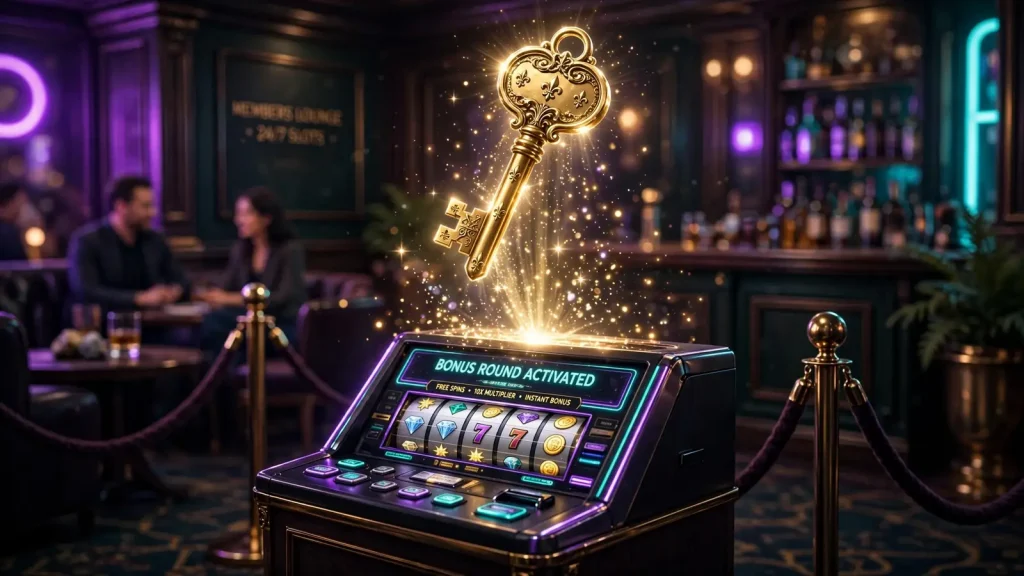
Bonus buys enter a slot feature directly, but each activation follows the game’s rules and can produce a different outcome.
How Bonus Buys Change a Slot Round
A bonus buy is an in-game option that lets you pay to enter a slot’s bonus round directly, instead of making standard spins and waiting for the game to trigger that feature. In a slot that offers the option, the purchase changes how the round begins: you choose the feature, the game charges its displayed cost, and the bonus sequence starts.
A standard spin follows a different route. You place a bet and start the base game; the reels stop according to the game’s rules, and a bonus may begin only if the required trigger occurs. If it does not, the round ends without that feature. Buying a bonus skips this wait, but it does not turn the purchase into a prediction about what the bonus will pay.
The distinction is about access, not the result. A buy can provide a direct route into a feature, but the feature still follows its programmed rules. Its outcome can vary from one activation to another. Paying to start it does not guarantee a win, a particular multiplier, or a return equal to the purchase cost.
The option is not part of every slot, and its effect depends on the game. Some slots may offer a purchase for a particular bonus feature; others may have no buy option at all. The game’s information panel should explain what the purchase activates and show its price before you confirm it. Without that option, you can access the bonus only through the game’s ordinary trigger conditions.
It helps to think of a bonus-buy slot as having two ways to reach a feature, where the game provides that choice. One route is to play the base game and let its trigger determine whether the bonus starts. The other is to pay for direct entry. Neither route changes the feature’s rules once it is under way, and direct entry does not remove uncertainty from its outcome.
This also explains why “buy the bonus” does not mean buying a prize. You are paying for access to a game event, not purchasing a fixed payout. The bonus may use its own sequence of spins, selections or other game actions, depending on the title, but the purchase alone does not tell you what those actions will return. Read “bonus buy” as a feature-entry mechanism, rather than a separate kind of guaranteed-win spin.
So, when someone asks what a bonus-buy slot is, the useful answer is specific: it is a slot with an optional paid route into a bonus round. A standard spin attempts to reach that round through play; a buy starts it directly. The two methods differ in how the feature is entered, not in any promise about the result.
What Slot Features Can You Actually Buy?
A bonus-buy option is part of a slot’s design, not a standard control shared by every game. The game must include a bonus feature and offer a way to enter it through a purchase. If it does not, you cannot buy a bonus in that slot; the feature has to be reached through the game’s regular play.
The feature being purchased also varies. A bonus round might use a different set of rules from the base game, such as applying multipliers to wins collected during that round. The purchase gives access to the specified feature, but it does not make every possible outcome of the feature equivalent. Its rules determine what can happen once it starts.
Low-volatility slots provide one example of how a bonus can fit into a game’s structure. These games typically have five reels and at least twenty-five paylines. Their jackpot amounts are fixed rather than drawn from a progressive pool, and their bonus rounds commonly use multipliers on accumulated wins. In that design, the bonus is connected to the game’s win-collection mechanics: the multiplier affects wins gathered within the feature, according to the rules of that particular slot.
Common Low-Volatility Features
Low-volatility slots typically feature five reels, twenty-five or more paylines, and fixed jackpot amounts.
Those characteristics do not establish that a game has a bonus-buy option. Reel count, paylines and jackpot structure describe parts of the slot, while the availability of a purchase is a separate design choice. Two games can share some structural features yet offer different ways to enter their bonus rounds. You need to check the individual game’s information rather than infer availability from its general format or volatility label.
The same distinction matters when a slot has more than one feature. A purchase may apply to a particular bonus round, not to every feature shown in the game. The rules should identify which round the option opens and how its mechanics work. If the wording only describes a bonus as part of ordinary play, that alone does not mean it can be bought.
So, when looking for slots with a purchasable bonus, treat the game’s own feature description as decisive. The purchase option must be explicitly offered, and the bonus rules must explain what it activates. A slot’s appearance or familiar reel layout cannot tell you that by itself.
How to Use a Bonus Buy Without Skipping the Important Details
Before activating a bonus buy, check the price shown by the game and the rules attached to the feature. The displayed cost tells you what will be taken from your balance for that action; the rules explain what it starts, whether the feature can be selected at your current stake, and how the result is settled. Do not assume that two games with a buy button use the same pricing or trigger the same kind of round.
Fast Payout Online Casinos in the UK: What to Check
Next, compare that cost with the stake you intended to risk. A bonus-buy price can be substantially different from the cost of a standard spin, so treat it as a separate decision rather than an automatic extension of your usual bet. If the game offers different stake settings, confirm which setting is active before buying: the price and the value of any resulting feature can depend on it. Read the game’s information panel before confirming, and stop if the cost or the feature’s operation is unclear.
There is also a stake-limit check. A specialist review describes the Great Britain online-slot limits as £5 per game cycle for players aged 25 and over, and £2 for those aged 18 to 24. These figures are a reported description, not a substitute for checking the rules and controls of the licensed operator you use. The relevant measure is the total stake in a game cycle, rather than simply the amount you normally place on a spin. Check how the game and operator classify the bonus-buy action, and do not proceed if the displayed amount would exceed the applicable limit.
Finally, make sure you are confirming the feature you intend to buy, not merely starting a standard spin. A confirmation screen may show the price again; use it to verify the active stake and cost before committing. If the interface does not make those details clear, cancel and inspect the game rules instead. This sequence keeps the decision grounded in the actual price, the feature’s conditions and the stake limit, rather than the expectation that entering a bonus round will produce a particular result.
Bonus Buy Checklist
- Check the displayed purchase price
- Review the feature rules and result settlement
- Verify the active stake setting
- Confirm the total stake is within legal limits (£5 for 25+; £2 for 18-24)
Bonus Buy Features, Volatility and Session Outcomes
Volatility describes the pattern of a slot’s results, not whether a particular round is due to win. A low-volatility game tends to return smaller amounts more often. A high-volatility game tends to produce wins less frequently, with larger amounts when they occur. Neither pattern tells you what the next result will be.
Buying access to a bonus changes how you enter that part of the game; it does not turn the purchase into a forecast. The feature can still return less than its cost, and a favourable result is possible without being more likely simply because you paid to access the round. Treat each purchase as a new exposure to the game’s outcome, not as a step towards a payout.
Volatility affects how a session may feel. With frequent smaller returns, a low-volatility slot can show activity even while the balance gradually falls. A high-volatility slot may show longer stretches without a meaningful return, followed by a larger win. These are broad patterns, not schedules: neither guarantees that a win will arrive within a particular session.
The mathematical expectation is a separate issue from volatility. If a game has a positive house edge, its expected result for the player is negative over a sufficiently large number of rounds. That remains true whether losses tend to appear gradually or are offset by occasional larger wins. The expectation describes an average across repeated play, not the result you should expect from one feature purchase or one short session.
Online Slots Payout Percentage: Understanding RTP
A bonus buy feature slot can therefore produce very different short-term outcomes from one session to another. A strong result does not prove that the feature is favourable, just as a poor result does not show that a win is now due. The same distinction applies in reverse: a losing sequence does not make the next buy more likely to pay.
When you interpret a result, separate three things: the game’s volatility, the feature’s own payout rules, and the uncertainty of the individual outcome. Volatility helps describe the distribution of wins; it cannot predict their timing. A buy bonus feature slot remains a gambling decision, and the feature’s presentation does not remove the game’s underlying disadvantage where its house edge is positive.
Top online casinos in the UK
- ChanzeBonus: Slots Welcome Bonus #1 200% up to €500 · Payout speed: 1-3 business days
- EvoSpinBonus: 125% up to €2500 + 125 Free Spins · Payout speed: 1-3 business days
- SpinFormulaBonus: 550% Up To £15,000 + 550 FS · Payout speed: 1-3 business days
- x3betBonus: Welcome Pack 100% Up to £1.000 + 200 Free Spins · Payout speed: 1-3 business days
- ZombillionBonus: Welcome Pack 250% up to £4000 + 200 FS · Payout speed: 1-3 business days
- SlotoSportBonus: 500% up to £ 10 200+ 777 FS · Payout speed: 1-3 business days
- JetsetspinsBonus: 200% Bonus + 100 Free Spins + Free Royal Wheel · Payout speed: 1-3 business days
- DieselwinBonus: Welcome Pack 250% up to £4000 + 200 FS · Payout speed: 1-3 business days
- BritsinoBonus: Welcome Package – Get your £2,200 + 2,000 FS · Payout speed: 1-3 business days
How to Compare Bonus Buy Slots by Their Mechanics
A bonus-buy label tells you that a slot offers a way to access a feature directly; it does not tell you how the game is built or what that feature contains. To compare bonus buy slots, separate the underlying slot structure from the bonus round. Reels, paylines, jackpot rules and feature design each affect what you see during play, but none on its own predicts a particular result.
Reels and ways to win
Start with the reels: how many there are, how symbols land, and what combinations the game recognises. A five-reel slot can apply a bet across all five reels, but the reel count alone says little about the number of winning patterns. The game’s rules explain whether matching symbols must appear on designated paylines, in adjacent positions, or in another stated arrangement.
How paylines work
Paylines are designated paths across the reels that form winning combinations. They vary between games, with some using fixed lines and others using matching symbols across neighbouring reels.
Paylines describe paths across the reels that can form winning combinations. Check whether the game uses a set of defined lines or another system, such as wins formed from matching symbols across neighbouring reels. These systems are not interchangeable: they evaluate symbol layouts differently. A display with many visible symbol positions does not, by itself, tell you how wins are counted.
Payline count is therefore one comparison point, not a quality score. A low-volatility slot typically has five reels and twenty-five or more paylines, but that pattern is a characteristic, not a rule for every game. Read the paytable and game rules to see which lines are active, how symbols qualify, and whether the bet is applied across the available reels or in another way. Avoid comparing two games by reel count alone when their win conditions differ.
Jackpot structure
Next, check whether the slot has a jackpot and how its amount is defined. A fixed jackpot has a stated amount that does not grow as players contribute to a shared pool. A progressive jackpot, by contrast, is structured as a pool that can increase through play. These are different prize arrangements, so the label “jackpot” is not enough to establish how the prize works.
Video Slots in the UK: Reels, Stakes and Features
Low-volatility slots typically use fixed jackpot amounts rather than progressive pools. That can help you identify a common design pattern, but it does not mean every low-volatility game has the same prize structure, or that a fixed jackpot is part of its bonus-buy feature. Look for the game’s own explanation of how the jackpot is triggered and whether it is connected to a particular feature. If the rules do not link the jackpot to the bonus round, do not assume that buying the round changes your access to it.
What the bonus round does
Compare the bonus round by its actual sequence of play. The rules may describe how it begins, which symbols or choices appear, and what changes from the base game. Focus on the mechanic rather than the feature’s name: two slots can use similar labels while applying different rules.
A useful distinction is whether the round adds multipliers to wins already accumulated within it, changes how symbols are evaluated, or introduces another stated feature. Low-volatility games typically use bonus rounds built around multipliers applied to accumulated wins. That describes a common structure, not a promise that every bonus-buy slot works this way. Check what is accumulated, when a multiplier applies, and what ends the round; each detail changes how the feature is evaluated.
Also distinguish the bonus round’s internal rules from the slot’s standard win rules. A multiplier may modify a qualifying win without changing which symbol combinations qualify in the first place. Conversely, a feature may alter the game state in a way its rules spell out. The paytable and feature instructions are the basis for comparison; the title or promotional description cannot substitute for them.
Reel Layout
Number of reels and how symbols land and combine.
Win System
Whether wins use defined paylines or neighbouring symbol matching.
Jackpot Type
Whether the prize is a fixed amount or a growing progressive pool.
Bonus Mechanic
How the feature operates, such as applying multipliers to accumulated wins.
Build a like-for-like comparison
A practical comparison keeps the same categories for each game: reel layout, win system, jackpot arrangement, and bonus-round sequence. Record the stated mechanics in plain language. For instance, note whether wins depend on paylines, whether a jackpot is fixed or progressive, and whether the bonus feature uses multipliers on accumulated wins. If a detail is not explained in the game rules, mark it as unclear rather than filling the gap with an assumption.
Then separate structural similarity from identical behaviour. Two five-reel games may differ in their paylines and feature rules. Two bonus rounds may both use multipliers but apply them at different points in the round. A shared jackpot label may refer to different prize arrangements. The comparison is useful only when each term means the same thing across the games being considered.
This framework helps you compare UK bonus-buy slots without treating a feature purchase as evidence that the games are alike. The buy option describes access to a round; the reels, win conditions, jackpot structure and round rules describe what that game actually does. Read those elements together, and you can identify meaningful mechanical differences without relying on a slot’s name or a broad category label.
Casino Bonuses, Bonus Buys and the Difference Between Game Types
The word “bonus” can refer to two separate things when you play online. A casino bonus is an offer made by an operator, while a slot bonus buy is an option within a particular game. The similar wording can make them seem connected, but they work at different levels: one belongs to the account and its offer terms; the other belongs to a slot’s controls and rules.
3-Reel Slots in the UK: Layouts and Play
A casino welcome offer may add a promotional balance or provide another stated benefit under conditions set by the operator. Those conditions determine who can use the offer, which games qualify and what happens when the offer is accepted. Read the offer terms as a separate set of rules from the slot’s paytable and feature instructions. An account offer does not, by itself, add a bonus-buy button to a game or make a feature available where the game does not provide one.
A slot bonus buy, by contrast, is an in-game purchase that gives you access to a designated bonus round without waiting for the normal trigger. Its price and effect are specified by the game. It is not a casino promotion, and accepting a welcome offer does not change what the feature does. If both appear in the same session, keep their rules distinct: the operator’s terms govern its offer, while the slot’s rules govern the game and any buy option.
This difference also helps when you see phrases such as “casino games with bonus buys”. A casino site may host many kinds of games, but a buy option is a feature of a particular slot, not a general function shared by every game in the casino lobby. The useful check is the individual game’s information: it should explain whether a bonus buy exists and what happens when you select it. A casino welcome bonus cannot establish that detail for you.
Do
- Read the operator’s casino bonus terms separately
- Check the individual slot’s rule panel for buy options
- Distinguish between account offers and game features
Don’t
- Assume a casino bonus adds a buy button to a slot
- Confuse a welcome offer with a game’s internal rules
- Mistake a slot’s bonus buy for a roulette mechanic
Slots and live roulette do not use the same round structure
An online slot presents a game interface in which a spin produces a result according to that game’s rules. A bonus buy, where available, changes how you enter a slot feature; it does not turn the game into a table game. The feature remains part of the slot’s own sequence and is governed by that slot’s instructions.
Live roulette has a different structure. In European-style roulette, the wheel has 37 pockets, numbered from zero through 36. You place your bets before the ball is released to begin the round. The result then comes from the ball’s position on the wheel, rather than from selecting a slot feature or buying entry to a slot bonus round. French roulette uses the same 37-pocket wheel structure.
That distinction matters when comparing a slot offer with a casino offer. A promotion may be described by an operator in terms that cover specified games or categories, but the offer itself does not make roulette operate like a slot. Roulette does not acquire a slot’s bonus-buy mechanic merely because both games are available through the same online casino. Check the offer’s stated game eligibility and the rules of the game you intend to play.
What the operator’s role does—and does not—mean
The operator provides the account and makes any casino-level offer. The game supplies its own controls and rules. In Great Britain, the UK Gambling Commission regulates gambling activity, including online casinos, and its remit for remote gambling offered to consumers there applies regardless of where the operator’s key equipment is located. It is the sole regulator for commercial gambling in Great Britain and issues operating licences to businesses, as well as personal licences to individuals working in the sector.
Best RTP Casino Slots UK: How to Compare Games
That regulatory role should not be confused with a promise about a game result or an offer. A licence does not mean a welcome bonus changes the game’s mechanics, and it does not mean every game on a site includes a buy feature. Those questions are answered by the offer terms and the individual game information, respectively.
If you are looking for an online casino where you can buy a slot bonus, treat the casino and the slot as two separate checks. First, establish whether the operator’s offer applies to you and to the games you plan to play. Then confirm that the specific slot has a bonus-buy option and understand what it activates. If you move from a slot to live roulette, you are entering a different kind of round: bets are set before the ball is released, and the wheel determines the outcome. Keeping these distinctions clear prevents a casino promotion, a slot feature and a live table game from being mistaken for interchangeable “bonuses”.
Trying Bonus Buy Slots in Free Demo Mode
A free demo lets you open a slot and explore its controls without placing real-money stakes. If the game includes a bonus-buy option, the demo may let you select it and follow the feature sequence on screen. This can help you see where the option appears, what prompts are displayed and how the game returns to its main screen afterwards.
Attention: Demo mode balances and wins are fake and have no cash value; they do not predict real-money results.
The balance shown in demo mode is fake. It is not money you can withdraw or transfer, and any apparent win has no cash value. No payouts are awarded, even if the game displays a large result or adds credits to the demo balance. Treat those figures as part of the demonstration, not as money won.
What a demo can show
Use the session to examine the interface at your own pace. You can identify the stake controls, locate the bonus-buy button if one is available, and read the information presented before confirming an action. You can also observe how the game signals that a feature has started, where its instructions appear and what happens when the feature ends.
A demo can make a sequence easier to understand because there is no need to manage a real-money balance while learning the controls. You may be able to try the ordinary spin interface as well as the bonus-buy route, then compare how the screen changes between them. The purpose is to understand the game’s presentation and navigation, not to estimate what a paid session would return.
Availability varies by slot and by the version presented to you. Some demos may not offer a bonus-buy control, or may display the game without making every feature selectable. If you cannot find the option, that does not establish that every version of the game lacks it. Read the on-screen rules and controls available in that demo rather than assuming that a feature is accessible.
UK High-RTP Slots: How to Read Return Figures
What a demo cannot establish
Demo results do not predict real-money results. A sequence that appears favourable in free play does not show that the same sequence will happen after you deposit, and a poor demo run does not forecast a future loss. The displayed balance is not a measure of expected profit; it is a practice counter with no cash value.
The demo also cannot make a bonus buy risk-free in real-money play. Selecting the feature in a real-money game commits a stake under that game’s rules. A free session can show what the confirmation flow looks like, but it cannot reproduce the financial consequences of making that choice with money.
For a useful test, focus on observable details: whether the controls are clear, what information appears before a feature begins, and whether you can follow the sequence without confusion. Avoid using a demo win as a reason to increase a real-money stake. It remains a non-paying simulation, however realistic the graphics or balance display may look.
Free demo slots with a bonus buy can therefore serve as an interface walkthrough. They let you inspect the route through a feature before deciding whether you understand it, while keeping the distinction clear: demo credits are fake, demo outcomes do not pay, and the screen does not promise a real-money result.
Bonus Buy Casinos Outside GamStop: What the UK Licence Means
A casino described as “outside GamStop” is being defined by its relationship to a self-exclusion scheme, not by the rules governing its gambling licence. Those are separate checks. A site’s absence from GAMSTOP does not establish that it is authorised to offer real-money gambling to people in Great Britain, and a bonus-buy feature does not alter the operator’s obligations.
Licensing Risk
An operator being "outside GamStop" does not mean they are licensed in the UK. Always verify the casino on the UK Gambling Commission’s public register before depositing.
The UK Gambling Commission regulates commercial gambling in Great Britain, including remote gambling offered to consumers there. Its oversight applies regardless of where an operator’s equipment is located. A business offering real-money gambling to customers in England, Scotland or Wales must hold the relevant Commission licence. An offshore operator without a UKGC licence is outside that regulatory system; it is not made a UK-licensed casino by accepting British customers or advertising bonus-buy slots.
Before depositing, look up the operator on the UK Gambling Commission’s public register. Check that the licence is current and that the registered business corresponds to the casino you intend to use. A similar trading name is not enough: confirm the operator’s identity rather than relying only on a badge or a licence number displayed on the site. If you cannot match the casino to a current entry, do not treat it as authorised for Great Britain.
Licensing matters because it determines which regulatory framework applies to the operator. UKGC-licensed casinos must provide responsible-gambling tools, including self-exclusion, and accessible account controls. They must also offer an internal complaints process and access to an approved Alternative Dispute Resolution service. These requirements are not assurances that every session will go well or that a bonus buy will return its cost; they are safeguards and routes for handling account or service problems.
The same checks apply when you are looking for a bonus-buy casino demo in the UK. Trying a game without depositing does not verify the operator’s licence, and a demo does not make an unauthorised site suitable for real-money play. Keep the distinction clear: the game feature belongs to the slot, while permission to offer real-money gambling belongs to the operator.
If a site promotes itself as outside GamStop, read that wording as a reason to check its status carefully, not as proof of a special UK licence category. For Great Britain, the UK Gambling Commission is the sole regulator for commercial gambling. Verify the operator on its public register before depositing, and do not rely on claims about bonus buys or self-exclusion status as a substitute for that check.
A Named Bonus Buy Slot and What to Check Before You Play
Golden Sevens is a named slot you may encounter while looking for games with a bonus-buy option. Its name alone does not confirm that the feature is available. Availability can depend on the version of the game offered, so check the game itself rather than relying on a title list or a description elsewhere.
Open the slot’s rules or information panel before starting a real-money session. Look for an explicit explanation of whether a bonus can be bought, how the option is accessed and what happens after you select it. If the rules describe only bonus rounds triggered during ordinary play, do not assume that a direct-purchase option exists. If the feature is not shown in the game interface, treat it as unavailable in that version.
Checking a Slot
Review Rules
Open the information panel to see if a bonus buy is explicitly offered.
Analyze Mechanics
Identify which specific bonus round the purchase enters and its internal rules.
Verify Interface
Check the game screen for the actual purchase control before playing.
Read the feature description closely. It should make clear which bonus round the purchase enters and whether the round has its own rules, such as a defined sequence of spins or a multiplier applied to accumulated wins. These details affect what the feature does; the word “bonus” by itself does not explain the outcome. If the panel is unclear or the purchase control is absent, do not infer its function from another slot with a similar name.
Check the game’s general rules as well as the bonus-specific text. Reel layout and paylines describe how winning combinations are formed during regular play, while the bonus rules explain what changes after entry. A low-volatility slot, for instance, commonly has five reels and at least twenty-five paylines, with a fixed jackpot rather than a progressive prize pool. Its bonus rounds may apply multipliers to wins collected during the feature. Those characteristics describe a general game structure, not a confirmed specification for Golden Sevens.
When comparing Golden Sevens with another title, keep confirmed details separate from assumptions. Record whether the buy option is actually present, what the rules say it activates, and how the feature differs from the standard game. Do not treat a game as a bonus-buy slot solely because a third-party list places it in that category. The rules displayed for the playable version are the more relevant reference.
This check is particularly useful when a title is described as new or is presented in a changing catalogue. A listing can introduce a game, but it cannot establish that every operator offers the same version or feature set. Confirm the option inside the game before making a decision to play.
Practising the Bonus Buy Before You Stake
A free-play demo lets you rehearse the actions involved in using a slot feature without risking a deposit. Find the feature control, check how its price is displayed, and follow the prompts to see what changes on screen after activation. The purpose is to learn the interface and sequence, not to test whether a particular choice will produce a payout.
Start by locating the game’s information panel and reading the instructions for the feature. Then return to the play screen and identify the relevant button or menu item. In a demo, you can see whether the game asks you to confirm a purchase, displays a revised stake, or moves directly into the feature. These details vary by slot, so practising in the specific game is more useful than assuming every interface works the same way.
Watch the transition into the bonus round as well as the controls available once it begins. Note how the game shows its progress, where any accumulated win is displayed, and how you return to the base game. If you cannot tell whether an action is a standard spin or a feature purchase, pause and check the game instructions rather than clicking through. A clear understanding of the screen flow reduces the chance of selecting the wrong control when playing with money.
Demo balances are not real funds, and demo wins are not paid out. A result shown in free play therefore cannot establish what a real-money session will return. It only shows how the software presents a round and responds to your inputs. The same caution applies to repeated practice: seeing a feature produce a favourable result in a demo does not make that outcome more likely when you later stake.
Use the practice session to check that you can recognise the feature price, understand the confirmation step, and exit or resume play as intended. If the interface remains unclear, do not proceed with a real-money purchase until you have read the game rules. Practice can improve your familiarity with the controls, but it does not alter the game’s underlying maths: when a game has a house edge, its expected result for the player is negative over sufficiently many rounds, even if losses build slowly.
Games
Prepared by the Golden Mister Casino UK editorial staff.